That "snap" of a magnetic charger or the simple convenience of dropping your phone on a pad is appealing. But you've probably heard the whispers: wireless charging might be silently killing your phone's battery. Is this convenience coming at a hidden cost?
We're here to get you a direct answer. This article will cut through the myths, explain how the technology actually works, and show you exactly how to choose a charger that is both safe and efficient for your battery.
How Does Wireless Charging Actually Work?
Thanks to inductive charging.
- Inside the charging pad, there's a coil of wire (a transmitter coil). When you plug the pad in, electricity runs through this coil, creating a small, oscillating magnetic field.
- Your phone also has a built-in coil (a receiver coil). When you place your phone on the pad, this magnetic field induces an electric current in the phone's coil.
- This current is what charges your battery.
To make sure any wireless-charging phone can work with any wireless-charging pad, the industry created a universal standard called Qi (pronounced "chee"). If both your phone and charger are "Qi-certified," they are guaranteed to work together safely.
If you're wondering, "Does the iPhone SE have wireless charging?" the answer is yes, for the iPhone SE (2nd generation, 2020) and iPhone SE (3rd generation, 2022). Both of these models support the Qi standard and will work with any Qi-certified charger.
What Will Actually “Kill” Your Phone -- Heat
Here is the simple truth: heat is the #1 enemy of your phone's battery. All batteries degrade over time, but high temperatures drastically speed up that degradation.
This is the real source of the "wireless charging is bad" myth.
Wireless charging is less energy-efficient than using a cable. During the transfer of power from the pad to the phone, some energy is lost. That lost energy doesn't just disappear—it's converted into waste heat.
If a charger is poorly designed or your phone is misaligned, it can generate enough excess heat to slowly damage your battery's long-term health.
Further Reading: Why Do My Phone Quick Chargers Get Hot When Charging? Should I Worry About it?
How to Reduce the Heat When Wireless Charge Your Phone?
Not telling you to avoid wireless charging, but to use a charger that is smart enough to manage the heat.
Quality chargers are not just simple pads; they are sophisticated devices. For example, Huntkey's wireless power banks are specifically engineered with multi-level safety systems.
Huntkey MG01-5K (5000mAh)
Huntkey MG01-5K is a magnetic wireless power bank designed for life on the move.
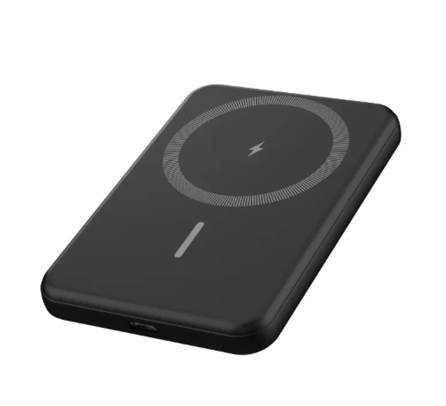
- At an incredible 11mm ultra-compact thickness, it’s one of the slimmest power banks on the market, snapping to the back of your iPhone.
- Get a 5000mAh boost, perfect for a full day's recharge, with secure 5W/7.5W/10W magnetic wireless charging for iPhone 12-17 series.
- Equipped with a built-in Type-C port, supporting 20W output and 18W input for fast transmission.
Huntkey MG01-10K (10000mAh)
This is your power user's solution
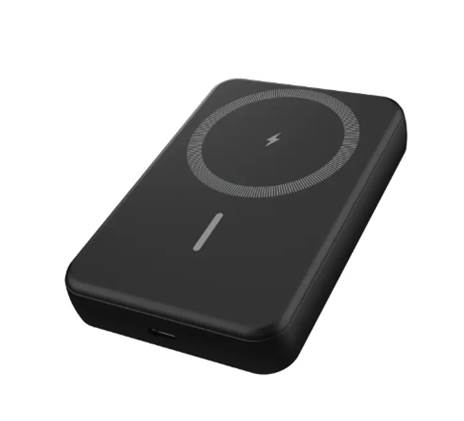
- Packing a massive 10000mAh capacity—enough for multiple full charges.
- It delivers a perfect-alignment 5W/7.5W/10W magnetic charge for your iPhone (12 or later) and doubles as a 20W fast-charging powerhouse via its wired port.
Despite its huge capacity, it remains compact and secure. This is the ultimate accessory for long days, travel, and peace of mind.
At a Glance: MG01-5K vs. MG01-10K
| Feature | Huntkey MG01-5K | Huntkey MG01-10K |
| Battery Capacity | 5000mAh (19.25Wh) | 10000mAh (38.5Wh) |
| Design | Ultra-Compact | High-Capacity |
| Thickness | 11mm | 18mm |
| Magnetic Wireless Output | Yes (Qi-Certified, 7.5W for iPhone) | Yes (Qi-Certified, 7.5W for iPhone) |
| Wired Input/Output | 20W | 20W |
| Best For | Daily carry, pocket-friendly top-ups | Long days, travel, multiple charges |
How to Protect Your iPhone Battery
Buying quality charging accessories is the first step.
Avoid cheap, unbranded chargers. They lack the critical safety features listed above. Always buy from a reputable brand and look for the "Qi-Certified" logo. Huntkey wireless chargers, including the MG01 magnetic series, are Qi-certified to meet strict global standards.
Then you will need to correctly charge your phone to extend the lifespan:
Avoid Extreme Temperatures
This goes both ways. Don't leave your phone charging in a hot car, and try to avoid using it for intensive tasks (like 3D gaming or streaming 4K video) while it's on the wireless charger.
Both charging and heavy use create heat; doing them together is a recipe for battery damage.
Remove Thick Cases
Wireless charging can work through thin plastic cases (under 5mm). However, thick, rugged cases or wallet cases with credit cards can block the connection. This forces the charger to work harder (creating more heat) and can even stop the charge completely.
Align it Right & Avoid Overnight Charging (If Possible)
For a standard pad, you have to do your best to center the phone's coil over the charger's coil. A poor alignment is inefficient and creates much more heat.
This is precisely why magnetic wireless chargers are the best solution. Products like the Huntkey MG01-5K (5000mAh) and MG01-10K (10000mAh) power banks use strong magnets (for iPhone 12 and later) to automatically "snap" into the most efficient alignment every time. This guarantees a faster, cooler charge and completely eliminates the guesswork.
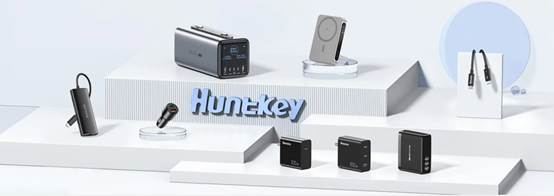
Charge Smarter, Not Harder with Huntkey
So, is wireless charging bad for your battery?
No—as long as you use a quality charger.
Don't sacrifice convenience. Just be smart about it. Choose a certified magnetic charger, keep it cool, and enjoy a cable-free life. Looking for reliable and branded charging accessories? Here get you covered.